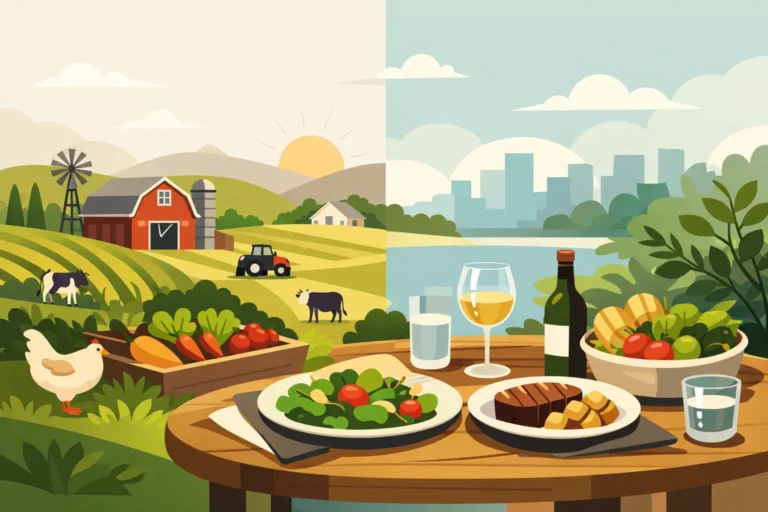
You can tell when a tomato has been picked too early. It looks the part, but once you slice into it, the flavour is thin, the texture is mealy and the whole meal feels a bit disappointing. That is exactly why farm to table fresh food keeps winning over busy households. It is not just about buying something local because it sounds nice. It is about getting food that tastes better, lasts better and makes more sense for the weekly shop.
For families, health-conscious shoppers and anyone tired of supermarket roulette, freshness is not a luxury. It is practical. Better produce means fewer wasted ingredients at the back of the fridge, fewer emergency top-up shops and more confidence that what arrives at your door is actually worth paying for.
What farm to table fresh food really means
The phrase gets used a lot, and sometimes too loosely. At its best, farm to table fresh food means shorter, clearer supply chains between growers, producers and the people buying their food. Instead of produce passing through layer after layer of wholesalers, depots and retail systems, it reaches households more directly.
That shorter journey matters. Vegetables, fruit, eggs, dairy and pantry staples do not improve by sitting in storage or travelling unnecessary miles. The less time food spends in limbo, the better chance it has of arriving in proper condition. That affects flavour, texture, shelf life and, just as importantly, trust.
It also changes the relationship people have with their groceries. When shoppers know where food comes from and who is behind it, buying stops feeling anonymous. You are no longer just choosing between plastic-wrapped versions of the same thing. You are buying from a supply chain that is easier to understand and easier to believe in.
Why freshness matters more than marketing
A lot of grocery retail leans heavily on presentation. Perfect lighting, polished packaging and broad claims about quality can make average food look premium. But fresh food proves itself quickly. You notice it when herbs still smell lively three days later, when strawberries actually taste sweet, or when leafy greens hold up long enough for more than one meal.
That is where direct-from-source sourcing has a real advantage. Produce handled less and moved faster tends to arrive with more life in it. For households trying to cook more at home, that can be the difference between using what they buy and throwing half of it away.
There is a money angle too. Waste is expensive. A cheaper bag of salad that collapses in a day is not a bargain. Slightly better quality that lasts and gets eaten usually works out better value over the week. Farm to table is often talked about as a quality story, but for many shoppers it is just as much a budgeting story.
The value question – is it always cheaper?
Not always, and pretending otherwise does not help anyone. Some farm-direct products may cost more than the lowest-priced supermarket equivalent, especially when compared with heavily promoted mass-produced items. But price on its own is only part of the calculation.
The better question is what you are actually getting for your spend. If food is fresher, lasts longer and tastes better, the value picture changes quickly. Add in fewer wasted items, fewer extra trips to the shops and clearer sourcing, and the gap often narrows or disappears.
This is especially true when households shop across categories rather than buying produce in isolation. Fresh vegetables, pantry staples, drinks, desserts and household essentials in one order save time as well as money. Convenience is often dismissed as a premium feature, but for working parents and busy households, convenience has real value. One reliable delivery can be far more efficient than piecing together a weekly shop from multiple places.
Farm to table fresh food and the modern weekly shop
One reason some people still assume farm-direct shopping is awkward is that they picture old-fashioned systems – limited opening hours, cash payments or unreliable availability. That is no longer the full picture. The strongest farm-to-door platforms combine local sourcing with digital convenience, which is exactly what busy shoppers need.
Ordering online, paying digitally and getting regular delivery turns a good idea into a realistic habit. That matters because most people do not want to shop based on ideals alone. They want a service that is easy, transparent and worth repeating next week.
This is where the farm-to-table model has evolved. It is no longer only for people willing to spend Saturday mornings browsing markets. It can fit into ordinary life: school runs, work schedules, meal planning and the usual household admin. Fresh food needs to meet people where they are, not the other way round.
Why shorter supply chains help farmers as well
Consumers usually focus on what they receive, but the other side matters too. When farmers and independent producers get better visibility and more direct access to customers, they are less dependent on systems that squeeze margins and create uncertainty.
That can lead to fairer returns and better planning. If growers know demand more clearly and can sell through a platform built around direct orders, they may be able to reduce waste and move produce more efficiently. That is good business for them and good news for customers who want a more dependable source of fresh food.
There is a wider local impact as well. Spending through direct and regional supply chains helps keep money circulating closer to home. It supports producers who might otherwise struggle for shelf space in conventional retail. That does not mean every product must come from the nearest field, but it does mean the food chain can work in a way that feels less extractive and more balanced.
What to look for when buying farm to table fresh food
Not every business using the phrase delivers the same standard. Some are genuinely built around direct sourcing and freshness. Others use the language because it sounds appealing. A smart shopper should look beyond the label.
Start with clarity. Can you see what kinds of producers supply the platform? Is the delivery model straightforward? Are prices presented clearly, without awkward surprises appearing late in checkout? These details matter because transparency is part of the value promise.
Then look at range. A useful fresh-food service should make the weekly shop easier, not harder. If you can buy quality vegetables but still need to go elsewhere for cupboard basics, drinks, babycare or household essentials, convenience starts to slip. A broader, well-curated offer often works better for real households than a narrow produce-only shop.
Consistency matters too. A one-off great box is not enough. People need confidence that next week’s order will be just as simple, fresh and fairly priced as this week’s. Reliability is what turns trial into routine.
A smarter way to shop, not just a nicer one
The appeal of farm-direct groceries is sometimes framed as emotional – supporting local growers, knowing your food, feeling better about where your money goes. Those things matter. But the strongest reason many people switch is simpler than that: it is a smarter way to buy food.
Smarter means less guesswork on quality. It means fewer wasted ingredients and fewer half-finished shopping trips. It means being able to fill your kitchen with food that is fresh, useful and delivered without unnecessary friction.
That practical side is why the model fits modern households so well. People want healthy options, but they also want speed. They want fair prices, but they also want confidence. They want to support better sourcing, but they do not want the weekly shop to become a project.
A platform such as Yild works because it treats those needs as connected rather than competing. Freshness, affordability and convenience should not be separate promises. They should arrive together in the same order.
Is farm to table always the right fit?
It depends on how you shop. If your main priority is chasing the absolute lowest shelf price on every single item, conventional supermarkets may still win on some lines. If you cook very little, the freshness advantage may matter less than it does for households preparing regular meals.
But for shoppers who care about quality, waste, convenience and clearer sourcing, farm to table fresh food solves several problems at once. It makes the food better, the shop easier and the supply chain fairer. That is a strong combination.
The real shift is not simply from shop aisle to farm gate. It is from passive grocery buying to more intentional grocery buying – without adding hassle. And once you get used to opening the door to food that is actually fresh, going back starts to feel like the compromise.