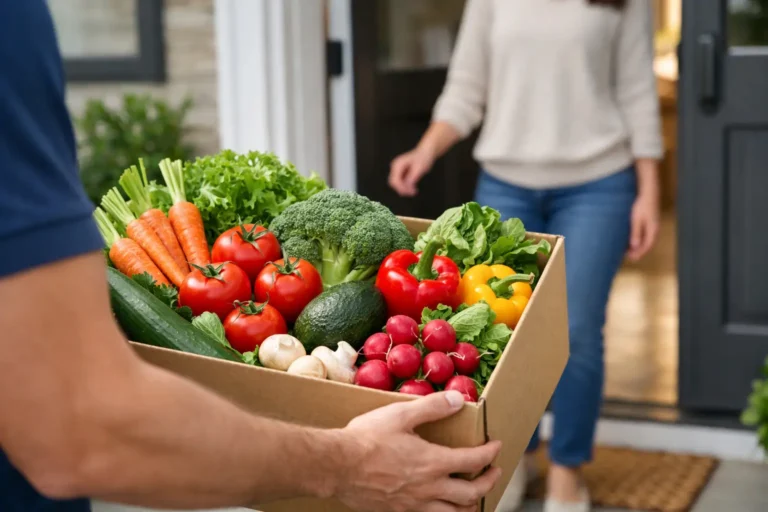
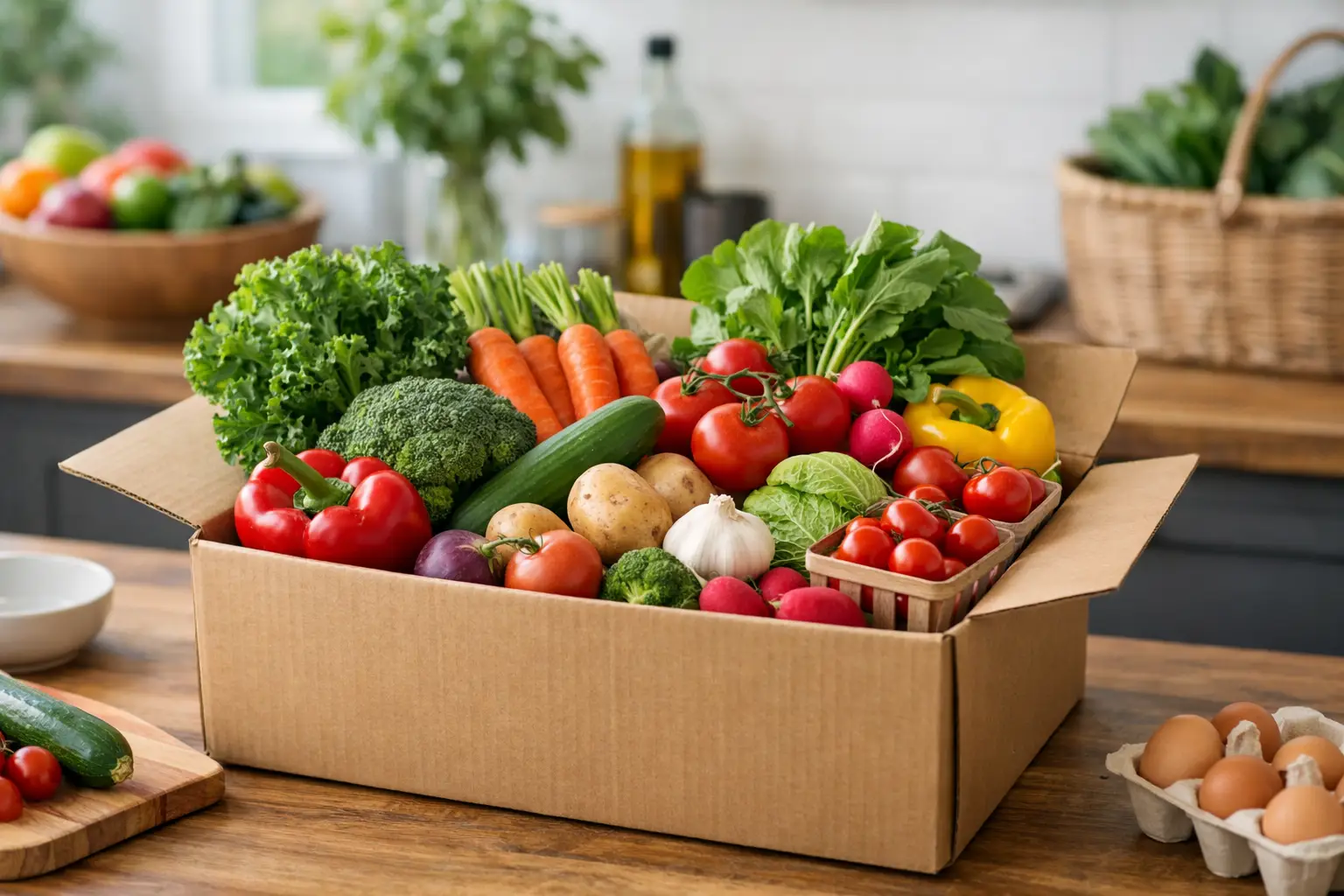
You notice the difference the minute you unpack it. A proper weekly vegetable box delivery gives you firm courgettes, crisp greens and tomatoes that still taste like tomatoes, not a last-minute supermarket top-up that has already spent too long in storage. For busy households, it is one of the simplest ways to keep the fridge stocked with food you actually want to cook.
That matters even more when the weekly shop has to do several jobs at once. You want fresh produce, fair prices and fewer stops across different stores. You also want a service that fits real life – reliable delivery, clear pricing and enough choice to cover everyday meals without creating waste. A good vegetable box should make shopping easier, not leave you planning around it.
Why weekly vegetable box delivery suits modern households
The old complaint about buying fresh produce is still the same: quality is inconsistent, and the effort rarely matches the result. You can spend time walking supermarket aisles only to come home with salad that turns by Wednesday and peppers that never really ripen. A weekly vegetable box delivery changes that by shortening the gap between grower and kitchen.
When produce comes directly from local farmers and trusted suppliers, freshness lasts longer because it has handled fewer stops. That is good for flavour, but it is also practical. Longer-lasting vegetables mean fewer emergency top-ups, less waste in the crisper drawer and more confidence when you plan meals for the week ahead.
There is a value angle too. People often assume a vegetable box is a premium extra, but that depends on how the service is built. If the supply chain is tighter and growers are selling more directly, pricing can stay fair while quality improves. That is a much better deal than paying supermarket prices for produce that has already lost a few days of shelf life before it reaches you.
What to expect from a good weekly vegetable box delivery
The strongest services keep things simple. You should be able to order quickly, understand what you are paying for and know when your box is arriving. If delivery details are vague or substitutions are constant, convenience disappears fast.
A good box also needs balance. Most households do not want six niche vegetables and nothing for everyday cooking. They want the basics done well – onions, potatoes, carrots, tomatoes, cucumbers, peppers, leafy greens and a few seasonal extras to keep meals interesting. The right mix helps you cook flexibly, whether you are making packed lunches, quick midweek pasta or a proper roast with sides.
Choice still matters, though. Some shoppers like a set box because it is quick and keeps decisions to a minimum. Others want more control, especially if they are cooking for children, avoiding certain items or trying to match a meal plan. Neither approach is automatically better. The best option is the one that helps your household use what arrives.
Freshness is not just a nice extra
Freshness sounds like a marketing line until you compare how food behaves through the week. Spinach that was packed close to harvest cooks better and keeps better. Herbs hold their scent. Carrots stay sweet and crisp instead of turning rubbery after two days. That changes how often you cook from scratch because the ingredients are ready when you are.
For families, this can make healthy eating more realistic. It is easier to put vegetables on the table when they look appealing and last long enough to use properly. Children may not care where the produce came from, but they do notice when strawberries taste better and cucumbers are actually crunchy.
There is also a trust factor. When you know a platform is sourcing directly and working with growers rather than treating produce as just another warehouse item, the whole shop feels more transparent. You know why it is fresher, not just that someone says it is.
The trade-off: convenience versus control
Not every weekly vegetable box delivery works for every home. That is worth saying plainly. If your household prefers total control over every item, a fixed box can feel restrictive. If you only cook two nights a week, even a modest box may be too much unless you are good at storing or batch cooking.
On the other hand, many people buy less efficiently when they shop ad hoc. They pick up a few bits here and there, forget staples, then spend more on a second or third trip. A weekly box creates a better baseline. The key is choosing the right size and ordering pattern, not assuming more is better.
Seasonality is another trade-off, but usually a positive one. You may not get the exact same range every single week, and that is often the point. Seasonal produce tends to be better quality and better value. It can ask a little more flexibility from you in the kitchen, but it usually gives more back in flavour.
How to make your vegetable box work harder
The most cost-effective box is the one you actually use. Start by ordering for your real habits, not your best intentions. If you know your household reliably cooks four evenings a week, build around that. It is far better to finish a smaller box than waste part of a larger one.
A little planning goes a long way. Use delicate items first – salad leaves, herbs, softer vegetables – then move to longer-lasting staples later in the week. Keep one or two flexible meals in mind, such as a traybake, soup or stir-fry, so any spare veg can be folded in without fuss.
It also helps when your grocery platform goes beyond produce. Being able to add pantry staples, drinks, desserts or household essentials in the same order saves time and makes the weekly shop more complete. That is where a service becomes genuinely useful rather than just a produce add-on. One delivery that covers fresh food and everyday basics is easier to stick with than a box that solves only part of the problem.
Why farm-direct sourcing changes the experience
A lot of grocery services talk about quality, but the sourcing model is what really shapes the outcome. When farmers and producers have a direct route to customers, there are fewer layers between harvest and home. That helps produce stay fresher, but it also supports a fairer system for the people growing it.
For shoppers, the benefit is practical. Better visibility across the supply chain often means less waste, clearer product standards and more confidence in what you are buying. For growers, direct access to demand can improve margins and reduce uncertainty. That is not abstract feel-good language. It is a smarter food chain, and customers usually see the result in the quality of what arrives.
This is where a platform approach makes sense. Instead of forcing shoppers to choose between convenience and local sourcing, a well-run marketplace can offer both. Yild is built around that idea – fresh farm produce delivered straight to your door, with the speed and simplicity people expect from modern online grocery shopping.
Is weekly vegetable box delivery good value?
Value is not just the price on the page. It is the full equation: freshness, shelf life, fewer wasted items, fewer top-up trips and less time spent shopping. If a box costs a little more than the cheapest supermarket equivalent but lasts longer and gets eaten, it can still be the better buy.
Promotions and clear pricing help too. Shoppers want to know what they are spending without hidden extras appearing at checkout. Delivery needs to feel straightforward, not like a bargain that turns expensive once fees are added. The best services understand that affordability is part of trust.
Good value also comes from reducing friction. If ordering takes two minutes, delivery is dependable and the produce performs well in the kitchen, people keep using the service because it solves a real problem. That is a stronger test than any short-term discount.
Choosing the right weekly vegetable box delivery for your area
The right choice usually comes down to four things: freshness, flexibility, range and reliability. Freshness tells you whether the sourcing is actually working. Flexibility tells you whether the box fits your household rather than forcing waste. Range matters because most people do not shop for vegetables alone. Reliability matters because even great produce loses its appeal if delivery is patchy.
If you are comparing options in places such as Ashford, Maidstone or Tonbridge Wells, look for a service that is clear about delivery days, honest about sourcing and practical about weekly shopping. It should feel like an easier way to buy food, not another subscription to manage.
The best weekly vegetable box delivery does not try to impress you with jargon. It simply gets the basics right – fresh food, fair prices, straightforward ordering and produce that earns its place in your kitchen. Once that becomes part of the week, the whole shop feels lighter, and dinner gets easier before you have even started cooking.