A tomato that was picked recently tastes different. So do greens that have not spent days in storage, bread made in smaller batches, and eggs that have travelled fewer miles before reaching your kitchen. That is the real starting point for the question, why is farm to table important. It is not just a food trend. It is a better way to buy everyday essentials when you care about freshness, value, and knowing more about where your shopping comes from.
For busy households, farm to table matters because it improves the basics. Food can arrive fresher, the supply chain is easier to understand, and more of what you spend can go back to the people actually growing and making it. For farmers and producers, it opens up direct access to customers instead of forcing them to depend entirely on traditional retail routes that often squeeze margins and increase waste.
Why is farm to table important for everyday shopping?
The simplest answer is that shorter supply chains usually create better outcomes on both sides. Shoppers get food that feels closer to its source. Farmers get a fairer route to market. That sounds straightforward because it is.
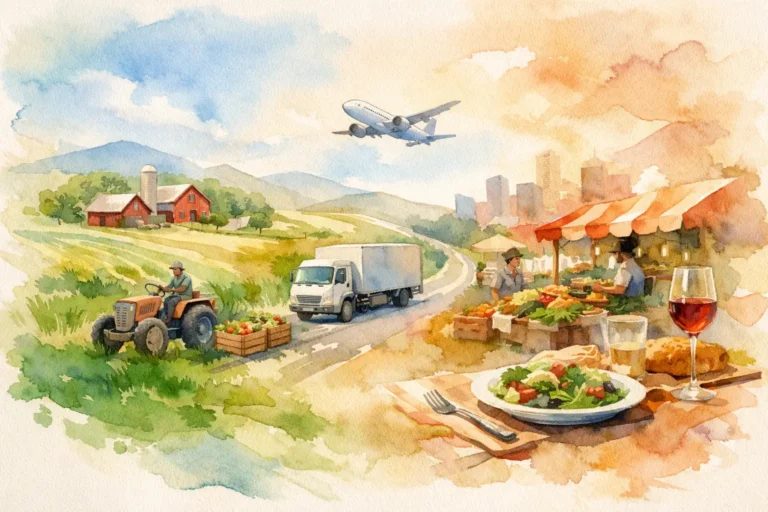
In a conventional grocery system, produce may pass through several layers before it reaches the shelf. It can be harvested early, transported to a distribution centre, held in storage, moved again, and finally displayed in-store. Every extra step adds time, handling, and cost. Farm to table reduces that distance between grower and household.
That change has a visible effect on quality. Leafy vegetables stay crisper. Fruit often has better texture. Pantry items from smaller producers can feel more intentional rather than mass processed. Even when the difference is subtle, it adds up over a weekly shop. Meals taste better when ingredients start better.
There is also a trust benefit. People increasingly want more than a label and a barcode. They want to know whether their food was sourced responsibly, whether local producers are being supported, and whether the final price reflects real value instead of unnecessary mark-ups hidden inside a long chain.
Freshness is not a luxury
Freshness often gets treated like a premium extra, but for most households it is practical. Fresher food tends to last longer at home, which can mean less waste in the fridge and fewer top-up trips during the week. If your vegetables hold their quality for longer, you are more likely to cook them rather than throw them away.
This matters for families trying to eat well without overspending. A weekly delivery of fresh produce, pantry staples, and household essentials can be easier to manage than relying on supermarket stock that may already be several days into its shelf life. Better shelf life at home is not just a quality issue. It is a budgeting issue.
That does not mean every farm-to-table product will always be perfect or identical. One of the trade-offs is that local and seasonal food can be more variable. A carrot may be smaller one week. Strawberries may be available for a shorter window. But many shoppers see that as a sign of real food, not a drawback.
It creates a fairer deal for farmers
A lot of conversations about food focus only on the customer, but farm to table is just as important for the producer. Farmers often face pressure from large buying systems that prioritise volume, standardisation, and price negotiation power. In that setup, a grower can do the hardest part of the work and still end up with a thin margin.
Direct-from-source selling changes the economics. It can give farmers better visibility, more predictable demand, and a greater share of the final selling price. It can also reduce the problem of good produce being rejected for cosmetic reasons. Not every cucumber needs to look identical to be worth eating.
When farmers have stronger routes to market, local food systems become more resilient. That benefits customers too. A healthier supplier network means more consistent access to fresh goods and less dependence on long, fragile supply chains.
For a platform such as Yild, this is where technology becomes useful rather than flashy. It helps connect growers and shoppers in a practical way, making ordering, payments, and delivery more efficient while keeping the source closer to the customer.
Less distance often means less waste
Waste happens at several points in the food chain. It happens on farms when produce cannot find a buyer quickly enough. It happens in transit when timing slips. It happens in shops when stock sits too long. And it happens at home when food has already lost too much freshness before it is even unpacked.
Farm to table can help reduce all of that, though it is not a magic fix. Shorter timelines and clearer demand can lower the chance of products sitting around unnecessarily. More direct selling also means producers can plan around actual orders and buying patterns rather than broad forecasts.
That matters financially and environmentally. Less waste means fewer lost products, fewer wasted inputs, and fewer needless transport miles attached to food that never gets eaten.
There is an important nuance here. Local is not automatically lower impact in every case. Growing methods, packaging, transport efficiency, and seasonality all play a part. A nearby product is not always the best choice on every measure. But as a general model, a shorter and smarter food chain gives you more control over waste and more transparency about how goods move.
Better food access with more convenience
One reason some people dismiss farm to table is that they picture weekend markets, limited opening hours, and extra effort. That used to be a fair concern. Convenience matters, especially if you are juggling work, family meals, school runs, and everything else that fills a week.
The model has changed. Farm-to-door platforms bring the same core benefits of direct sourcing into a format that fits modern shopping habits. You can order online, plan a regular delivery, and add more than produce to your basket. That is important because most households do not shop in categories. They shop for life as it is actually lived – vegetables, drinks, pantry items, baby care, household basics, and a few treats in one go.
This is one of the strongest reasons farm to table now matters more than it did before. It no longer asks people to choose between principles and convenience. A smarter supply chain can offer both.
Why is farm to table important for local communities?
When more spending stays closer to home, the impact spreads beyond a single order. Local producers gain sales, independent makers gain visibility, and communities keep more economic activity within their own area. That supports jobs, encourages food entrepreneurship, and helps build a more connected regional supply network.
There is a social value here as well. People feel more confident about what they buy when they understand the source. Food becomes less anonymous. That does not mean every customer wants a detailed farm profile for every item, but many do want clear sourcing and a sense that their money is backing something more useful than a faceless chain.
For delivery areas built around nearby towns and neighbourhoods, this can be especially powerful. A regional food marketplace can serve households more effectively because it is designed around local demand rather than national averages.
The trade-offs are real, but manageable
Farm to table is not flawless. Seasonal range can be narrower. Some prices may shift with weather or harvest conditions. Choice can feel more curated than endless. If someone expects every product to be available every day of the year at the lowest possible price, they may find parts of the model restrictive.
But the comparison should be fair. Cheap food is not always cheap once you factor in waste, lower quality, and the hidden costs of a stretched supply chain. And unlimited choice is not always useful if much of it is generic.
For most shoppers, the better question is not whether farm to table solves every issue. It is whether it improves the weekly shop in the ways that matter most. If you want fresher produce, clearer sourcing, less waste, and a fairer route from grower to kitchen, the answer is usually yes.
Farm to table matters because food is not just a product. It is part of your health, your household budget, and your local economy. When the journey from source to door is shorter, fairer, and more transparent, everybody has a better chance of getting a good deal. And that is a smart place to start your next shop.