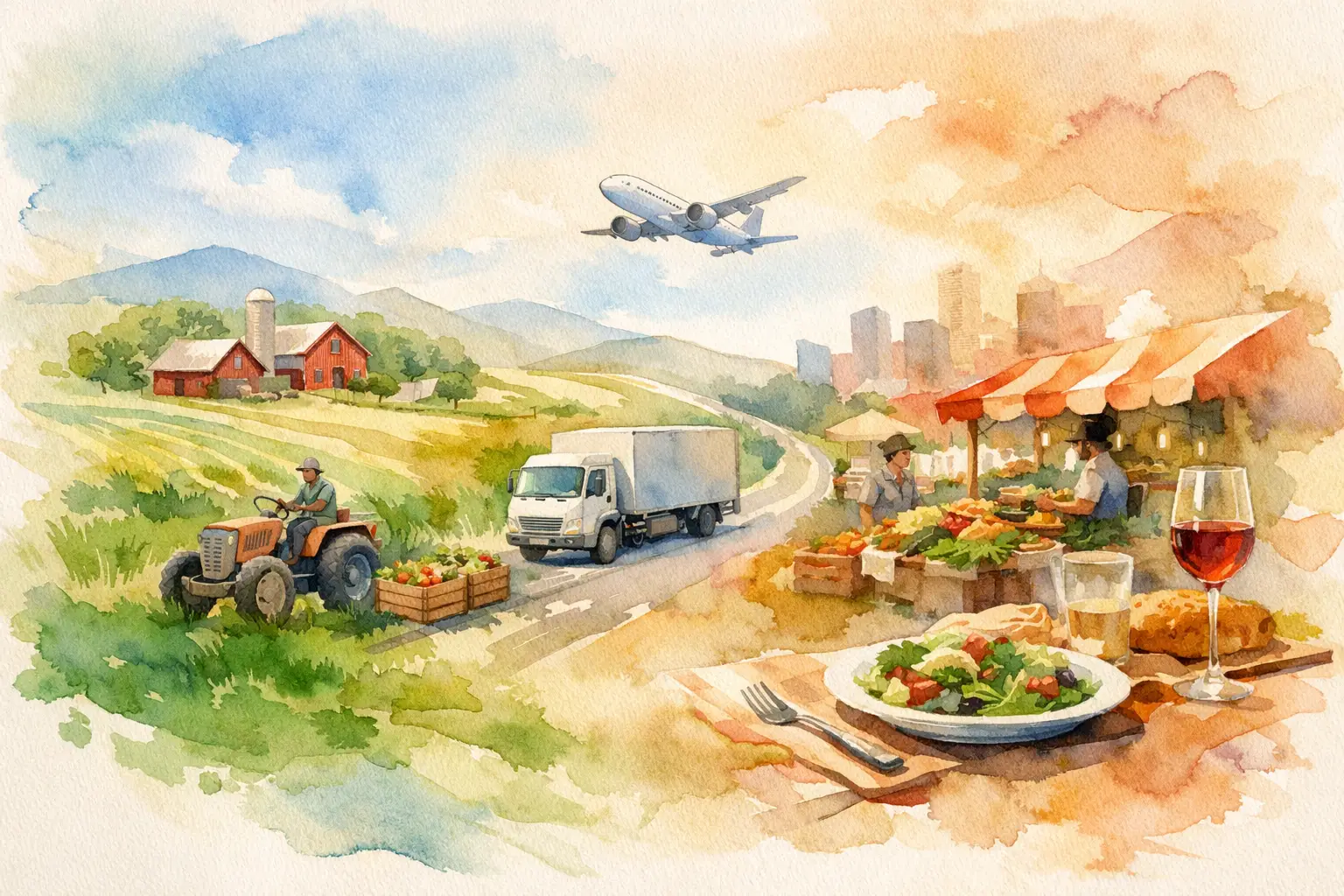
A tomato picked on Monday can be in your kitchen by Wednesday – or it can spend far longer moving through depots, storage units and supermarket systems before you ever see it. That is the real question behind how does food get from farm to table. It is not just about distance. It is about time, handling, cost and how many people stand between the grower and your weekly shop.
For most households, food arrives looking finished and ready to buy, so the journey stays invisible. Yet every carrot, loaf, jar and punnet follows a chain of decisions. When that chain is long, produce can lose freshness, farmers can lose margin and shoppers often pay for inefficiency they never asked for. When that chain is shorter and better organised, food tends to move faster, waste less and arrive in better condition.
How does food get from farm to table in practice?
The short answer is this: food is grown or made, harvested or prepared, sorted, packed, transported, stored if needed, ordered by retailers or platforms, then delivered to the customer. Simple on paper. In reality, each step affects freshness, price and reliability.
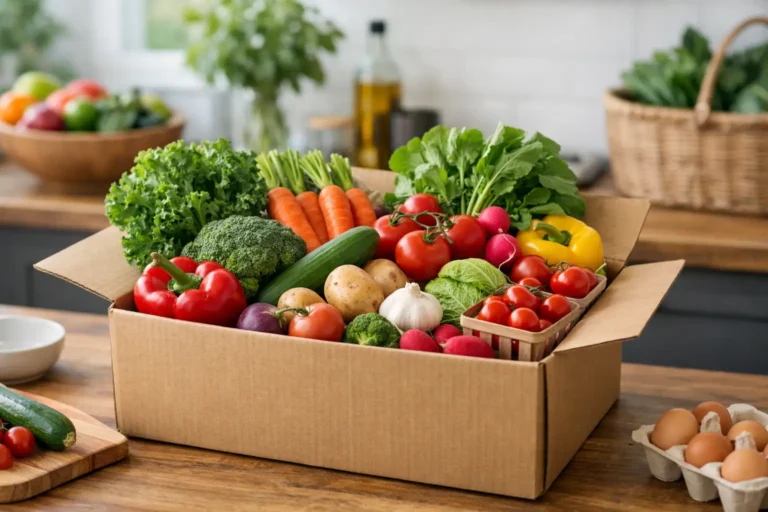
Fresh produce is usually the clearest example. A grower plants crops according to season, weather, labour and expected demand. Once ready, crops are harvested at the right stage of ripeness. Pick too early and flavour can suffer. Pick too late and shelf life shrinks. Timing matters because produce is alive even after it has been picked. It keeps changing as it moves through the supply chain.
After harvesting, food is normally cleaned, graded and packed. Grading sorts items by size, appearance and quality. That can help buyers know what they are getting, but it also creates trade-offs. Traditional retail systems often reject perfectly edible food for cosmetic reasons. A more practical supply chain can make better use of that produce, which helps reduce waste and gives growers more routes to sell what they grow.
Transport comes next. Some foods need chilled conditions straight away. Others are more stable and can travel dry. Leafy greens, berries and dairy products are more sensitive than potatoes, onions or pantry staples. Every extra handover adds risk. More waiting, more loading and more storage can all affect quality.
The traditional supply chain versus a shorter route
In a conventional grocery model, food may pass from farmer to wholesaler, then to a distribution centre, then to a retailer, then finally to the customer. That system can work at very large scale, but it also creates delays and cost layers. By the time produce reaches the shelf, it may already have spent days in transit and storage.
That does not mean every long supply chain is bad. Large retail networks can offer consistency and wide availability. They can also absorb seasonal shocks better in some cases. But the downside is often a weaker connection between the person growing the food and the person buying it. Shoppers get less visibility, and farmers usually keep a smaller share of the final selling price.
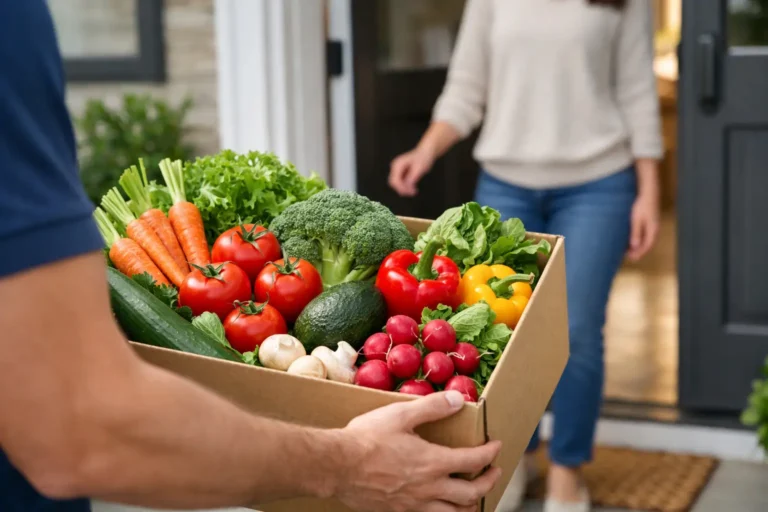
A shorter route changes that. When food moves more directly from source to customer, there are fewer stages where freshness can be lost and costs can build up. That is one reason farm-direct and local delivery models have become more attractive for busy households. They combine convenience with better sourcing logic.
What happens before harvest matters too
If you want to understand how food gets from farm to table, the journey really starts before anything is picked. Farmers plan crops months ahead. They look at seasonality, field conditions, seed choice, water needs and likely customer demand. They also manage risks that shoppers do not always see, from late frosts and heavy rain to pests, rising fuel costs and labour shortages.
Those early decisions affect what ends up available for your weekly order. British-grown food is often highly seasonal, especially fruit and vegetables. That seasonality is not a flaw. It is one of the reasons local food can taste better and arrive fresher. The catch is that supply can be less uniform than people expect from supermarket shelves. A practical food platform works with that reality rather than pretending every crop behaves the same in every month.
Packing, storage and why handling changes quality
Once food is harvested or produced, packing is not just about presentation. It protects the product, preserves quality and helps orders move efficiently. Good packing prevents bruising, contamination and spoilage. Poor packing can undo a farmer’s work in a day.
Storage is where things become more nuanced. Some food should move quickly with minimal holding time. Other items benefit from controlled storage. Apples, root vegetables and dry goods can handle different conditions than soft fruit or fresh herbs. The goal is not simply to move everything at top speed. The goal is to move each product in the right way.
That is where modern food logistics make a real difference. Better demand planning, clearer ordering cycles and closer supplier coordination help avoid both shortages and waste. A marketplace model can be especially useful here because it brings supply and customer demand closer together, instead of relying on broad forecasts alone.
Why delivery models change the farm-to-table journey
Online grocery has changed customer expectations. People want fresh food, fair prices and reliable delivery without spending hours visiting multiple shops. That convenience is not separate from the food chain. It is part of it.
A well-run farm-to-door model does more than swap a shop aisle for a website. It can shorten the route between producers and households while making ordering easier. Customers get one place to buy vegetables, pantry goods, drinks, desserts and practical home essentials. Farmers and producers get access to demand they may struggle to reach on their own.
That matters because convenience often decides where people shop. Even customers who care about local food still need the process to fit around family life, work and weekly budgets. If buying direct feels complicated, many will fall back on the nearest supermarket. If it is straightforward, reliable and fairly priced, a shorter food chain becomes the easier option, not the harder one.
Freshness, value and fairness are linked
People often talk about freshness as if it is only a taste issue. It is also a value issue. Food that reaches you sooner often lasts longer at home, which means less waste in your fridge and better value from each shop.
There is also the question of fairness. In long supply chains, producers can carry a lot of the risk while keeping a limited share of the final price. In shorter, more direct systems, farmers and makers can have better visibility and a stronger route to market. That does not automatically make every product cheaper, because growing and handling food still costs money. But it can create a more balanced model where customers understand what they are paying for and growers have a better chance to earn properly from what they produce.
For households, that balance matters. Most people are not choosing between ethics and convenience. They want both, plus sensible prices. The strongest food platforms are the ones that treat those needs as connected rather than competing.
Where delays and waste usually happen
Food waste can happen anywhere along the route, but some pressure points come up again and again. Overproduction is one. Cosmetic rejection is another. Delays in transport, poor temperature control and inaccurate ordering also play a part.
At the household end, waste often starts with uncertainty. If shoppers do not know where food came from, how fresh it is or how long it has already been in the system, it becomes harder to plan meals well. Better supply chains support better home shopping habits because products arrive with more useful life left in them.
This is one reason technology matters in food retail. Not as a buzzword, but as a practical tool. Better stock visibility, clearer supplier coordination, digital ordering and regular delivery windows all help food move with less guesswork.
What shoppers should look for in a better food chain
If you are comparing where to buy your weekly groceries, the best question is not just whether food is local. Ask how directly it moves from source to your door, how often deliveries run and whether the range covers real household needs.
A good service should make fresh produce easy to add to the weekly routine, not a special extra. It should also give you access to more than one part of the shop, because most households are not buying carrots in isolation. They are buying fruit, veg, cupboard staples, drinks, babycare, body care and everyday essentials in one go. That joined-up approach saves time and helps customers stick with fresher sourcing for more of the basket, not just part of it.
For many families, that is where platforms such as Yild make the model practical. The point is not simply that food comes from farms. It is that the whole process is organised around getting fresh goods to local households in a way that is fair, affordable and easy to repeat week after week.
The journey from farm to table is really a chain of choices. Some systems make food travel further, wait longer and cost more. Others keep things closer, quicker and clearer. When you understand that, shopping becomes less about picking items off a shelf and more about choosing the kind of food chain you want to support.